
Punchh - Mobile
AI-Powered Prototyping for Gamified Loyalty Experiences
My role
Lead Product Designer
Responsibilities
Research, Strategy, Design, Testing
Timeline
2 weeks (Dec ‘25)
Tools
ChatGPT, Figma Make, Figma, Usertesting.com
Overview
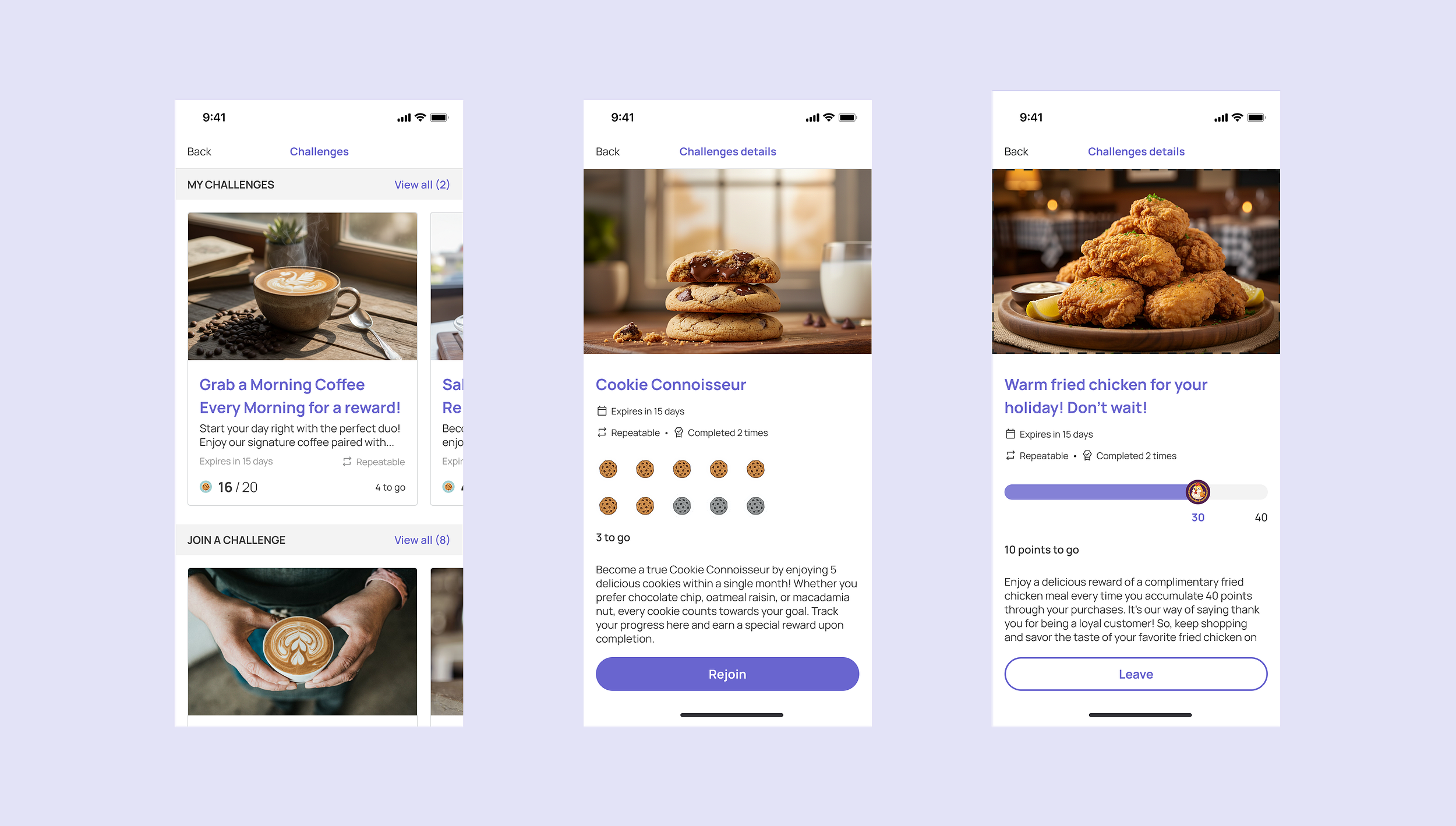
At the end of 2025, I joined a new team to bring gamification into Punchh’s white-labeled loyalty app. The timeline was tight — I had only two weeks to design the experience from concept to validation.
To move quickly without sacrificing user-centered thinking, I used AI tools to accelerate research synthesis, rapid prototyping, and iteration. Through multiple rounds of testing, I validated the core experience and refined the design into an intuitive Challenges feature that made it easy for restaurant loyalty guests to participate and stay engaged. Results:
100% task completion rate during usability testing
All participants rated joining or rejoining a challenge as “very easy”
Product Strategy
Goals
Introduce Challenges, a flexible gamification feature for white-label restaurant apps
Encourage reward-driven guest actions, such as repeat visits and item trials
Increase engagement, visit frequency, and incremental revenue
Requirements
Ensure the feature is scalable and generic enough to support white-label customization
Reuse existing white-label app patterns, such as card-based discovery and detail pages, to reduce development effort
Success Metrics
Reach a 20–30% package attach rate within 12 months.
Drive 10–15% challenge adoption among eligible monthly active users within the first 90 days
Achieve a 25–40% completion rate among joined users
Increase visit frequency and measure revenue lift from challenge-driven visits
Research and Define
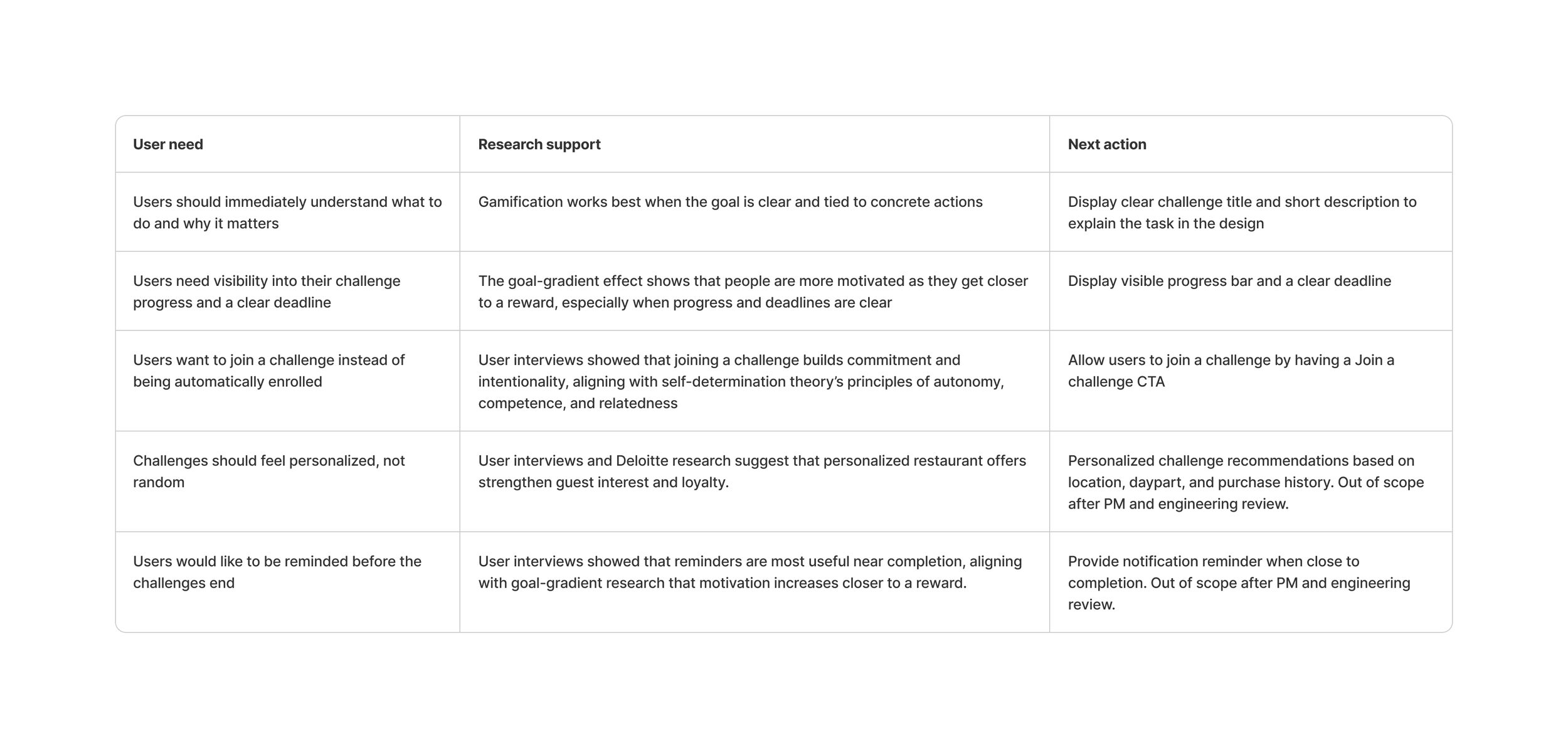
As time is limited to recruit and interview restaurant loyalty guests, I decided to do user interview with the marketers since they are the decision maker of the design mobile app and they have a deep understanding of their guests. Combined with secondary research by using AI, these are the findings:
Ideation
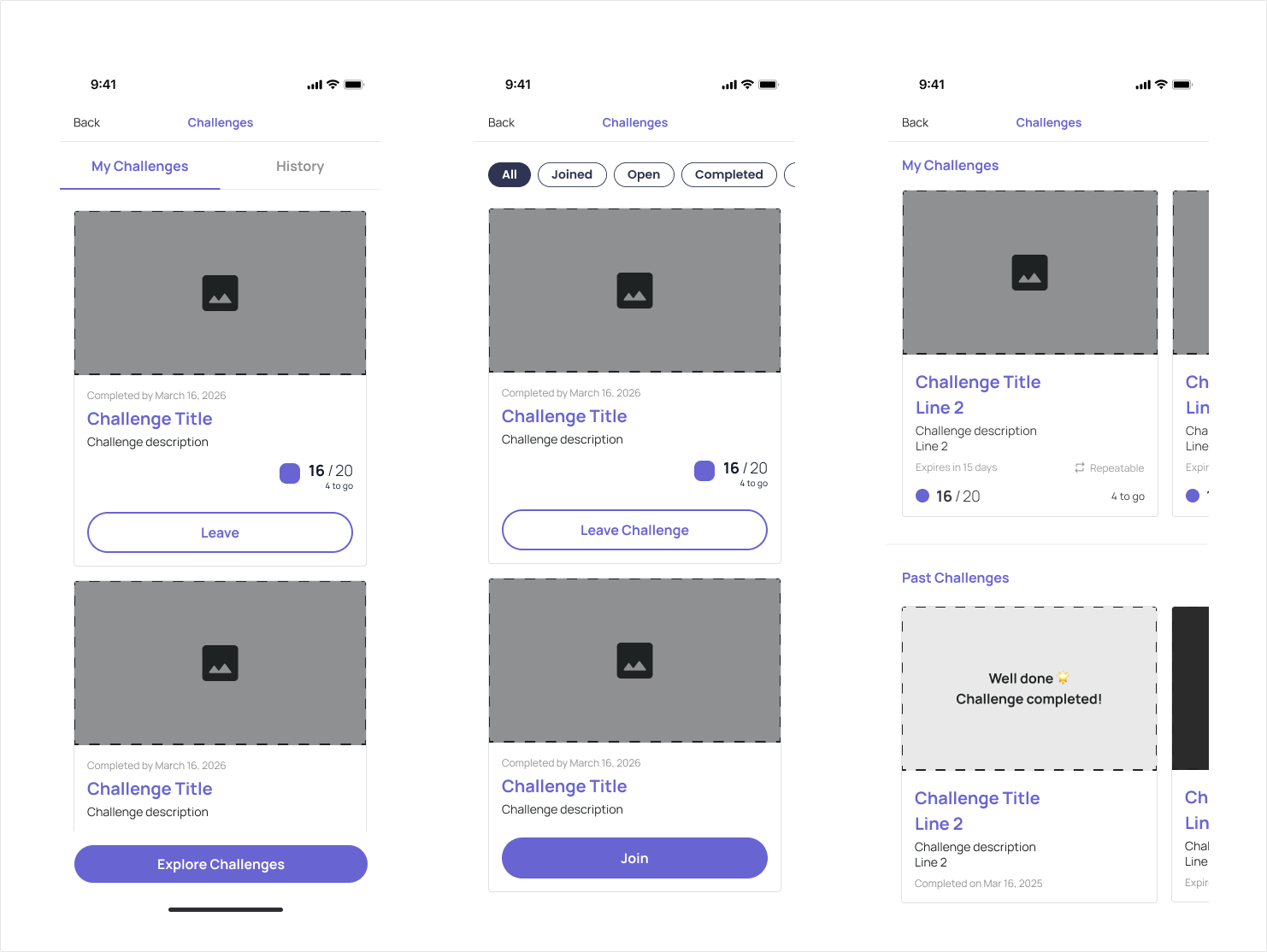
Because Challenges can have different statuses—such as New, Joined, Completed, and Expired—I explored various information architectures and card designs to help users easily distinguish and navigate them.
Rapid prototyping
After refining the wireframes, I used Figma Make to quickly turn them into a high-fidelity prototype with realistic content, enabling multiple rounds of testing and iteration.