
Standout
A digital profile empowering students to standout in their college applications
My role
An end to end design of a responsive website that supplements the leading admission platforms in the market
Scope
Responsive website (mobile-first)
Timeline
March - May 2019
Tools
Sketch, Figma and InVision
Overview
In March 2019, FBA charged 50 people who were allegedly part of the college admission bribery scheme, the worst college admissions scandal in history.
While most people blamed wealthy applicants for creating fake students’ profiles and using bribery to influence the admission decision, this scandal revealed a serious flaw of the admission process.
In fact, there was no platform enabling admission officers to verify applicants’ personal attributes and accomplishments efficiently.
Lawmakers, colleges and students were eager to reform the admission system. However, due to time and resources constraints, they found it difficult to implement a new and radically different admission platform to address the issue.
The Design Challenge
How might we design a digital landscape to supplement the admission platforms in the market and to help admission officers to verify students’ non-academic accomplishments?
Solution
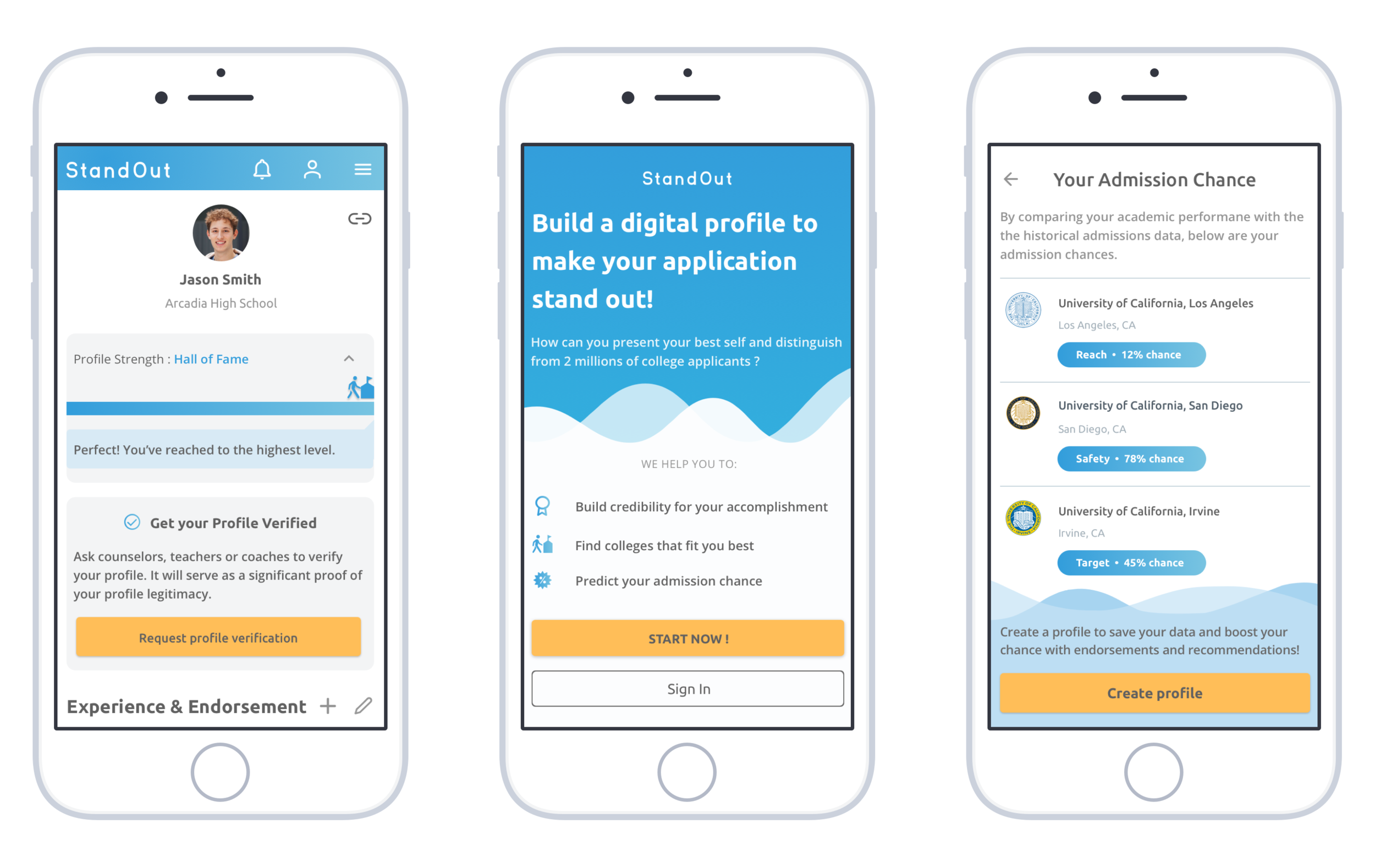
Standout is a responsive website that allows college applicants to build a digital profile and earn credibility of their non-academic achievements.
Students can submit their profile in the regular college admission systems, allowing admission officers to have a better picture of the applicants’ non-academic performances and to verify their integrity.
Addressing other major pain points faced by college applicants, Standout helps students to find college matches and learn about their admission chances.These features can assist students on preparing for their applications strategically and empower them to stand out from other applicants.
Research
Market Research
To start my research, I wanted to learn about what admission officers look for when they select students. Below are the key insights:
Based on a national survey, 95% of the admission officers mentioned they practiced holistic admissions.
In addition to academic accomplishments, holistic review value applicants’ quantity and quality of their personal achievements and personality traits
In fact, academic achievements can be easily verified by students’ official transcript and their test score reports, but what about non academic accomplishments?
Competitor Analysis
To answer this question, I conducted a competitor analysis to understand what is missing from the most popular admission systems for students to present their non-academic qualities.
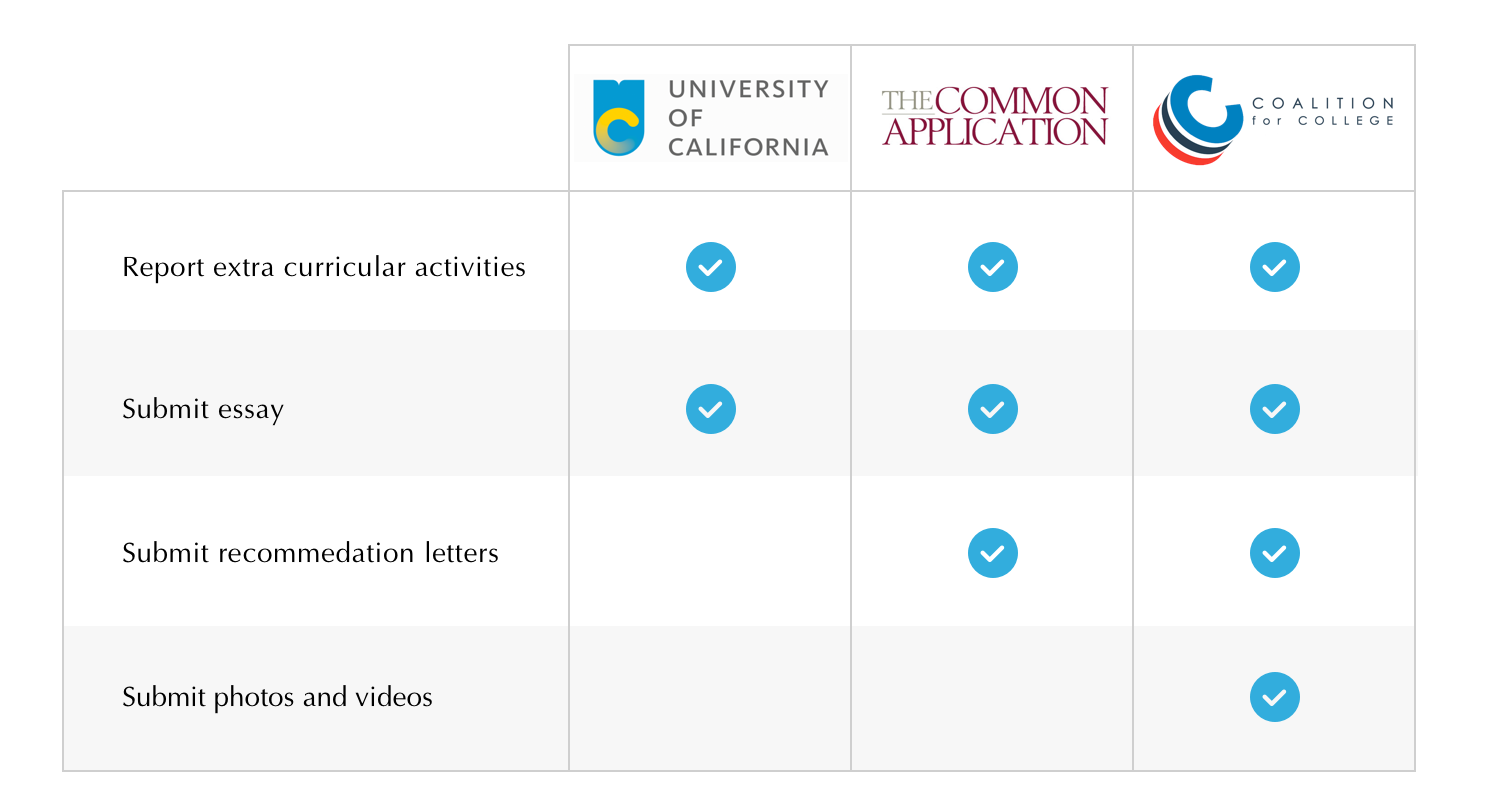
Based on my findings, I recognized the students’ unmet needs for:
A digital profile to present their extra-curricular activities with photos and videos
A space that allowing students to request recommendations from various people who can prove their positive personality traits
A solid verification system allowing students to show the legitimacy of their non-academic achievements
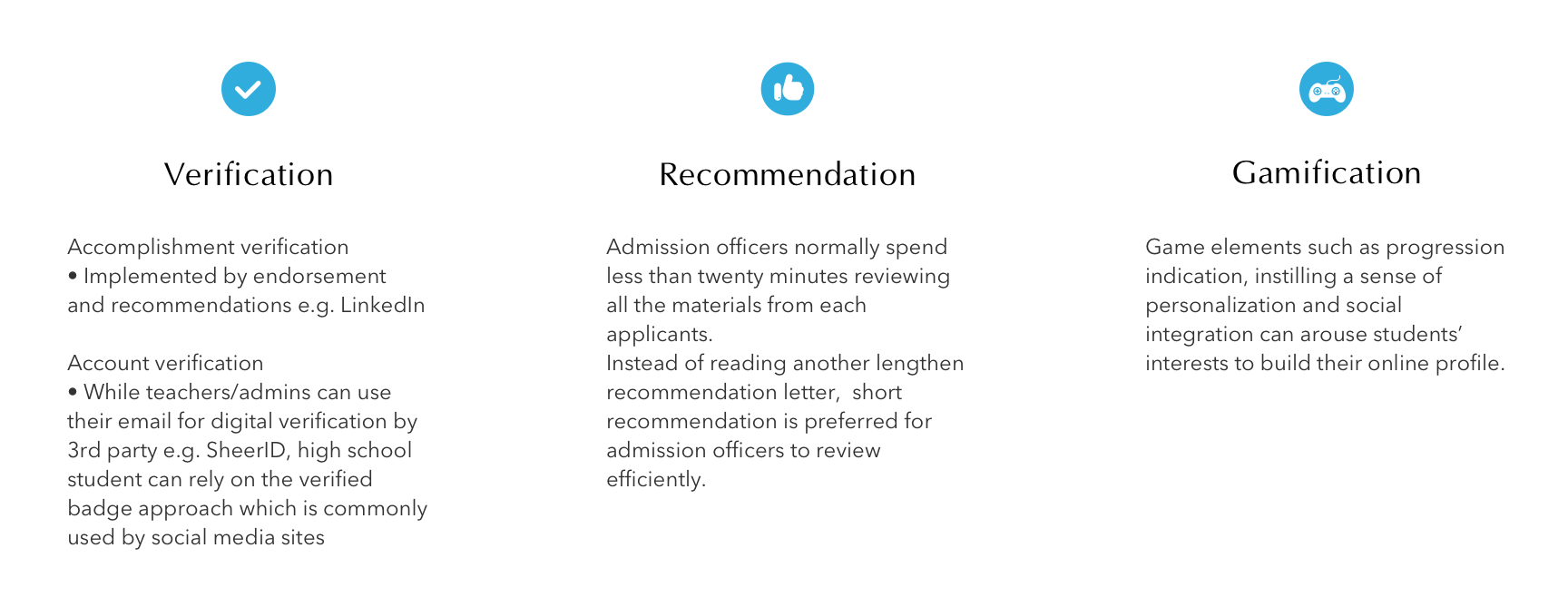
All these findings paved my way to conduct a further research of verification, gamification for profile building and recommendation.
User Interview
I conducted user interviews with 9 participants who all had applied for colleges via UC Admission and Common App in the past three years. I wanted to discover their biggest pain points and needs in their college application journey. The main takeaways were:
Difficult in crafting an organized and outstanding application that highlights their positive traits.
Unable to prove the legitimacy of their accomplishments
Uncertain which colleges they should apply and suit them the most
Feeling worried and uncertain whether they will be accepted since admission rate varies by schools and years
Define
Product
I decided to create a responsive website instead of mobile apps. College applicants heavily rely on their computer to submit their applications. A responsible website will give users flexibility to build their profile with their mobile phones while submitting their digital profiles in the official applications with their laptops.
Personas
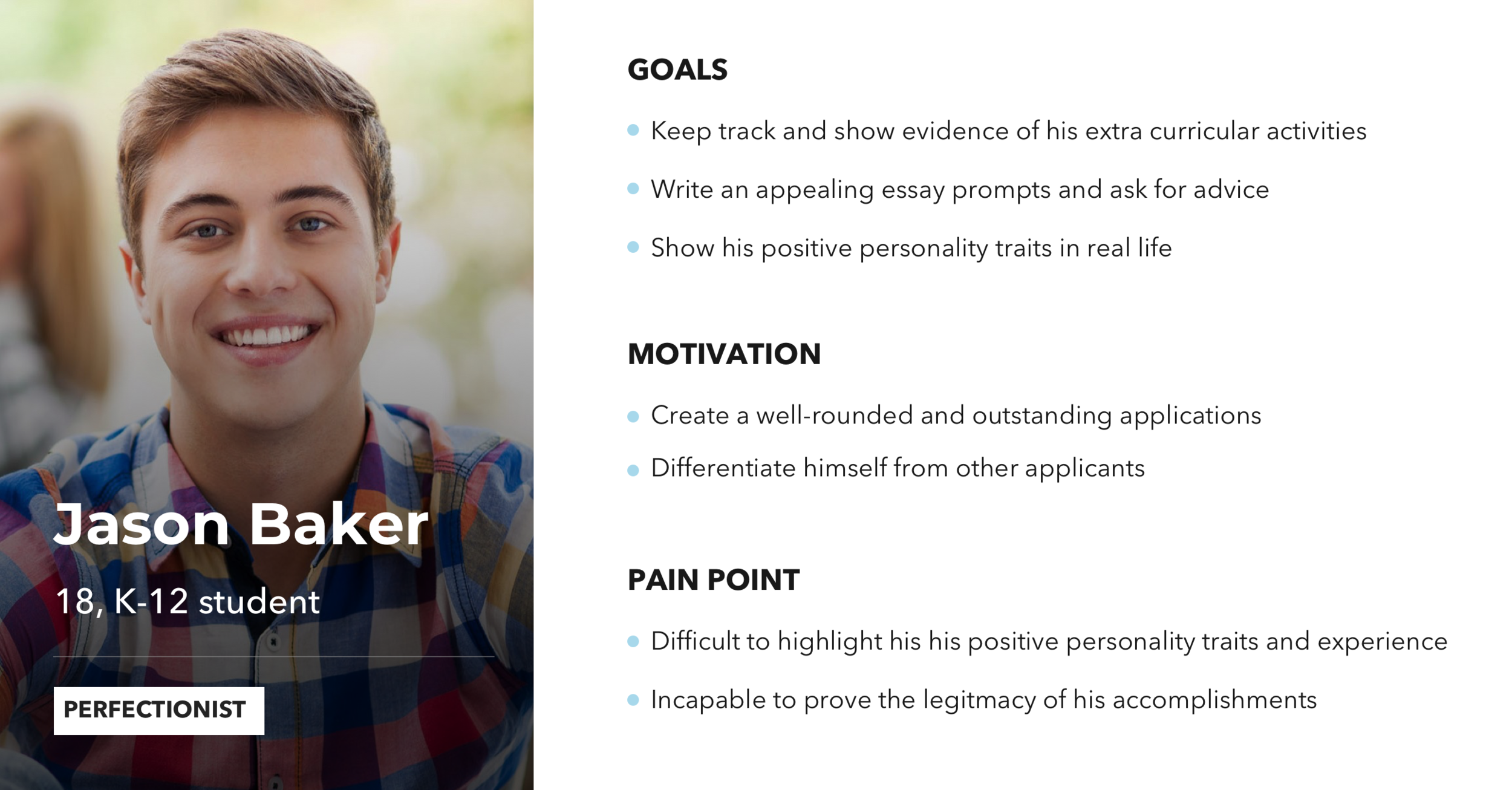
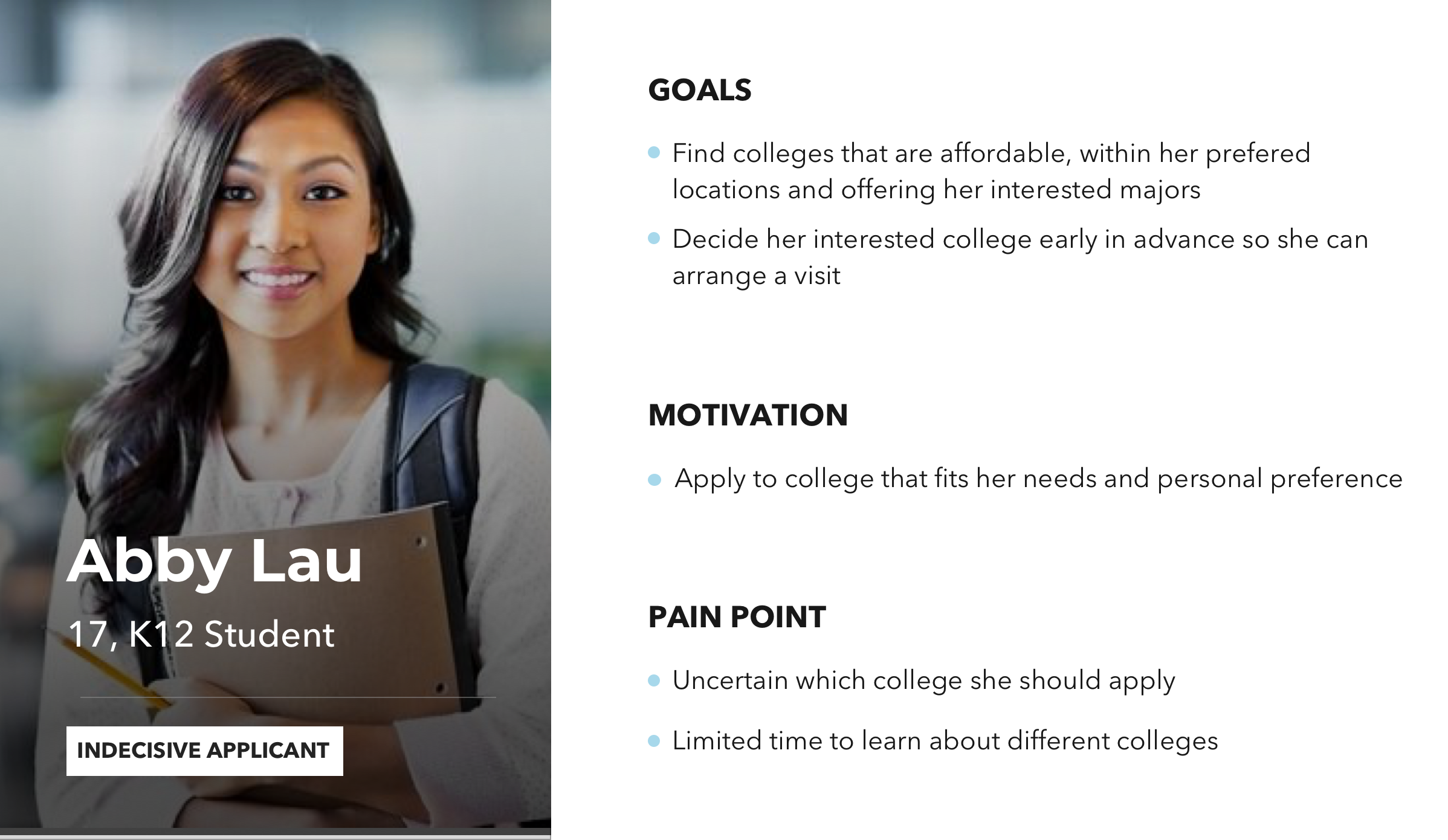
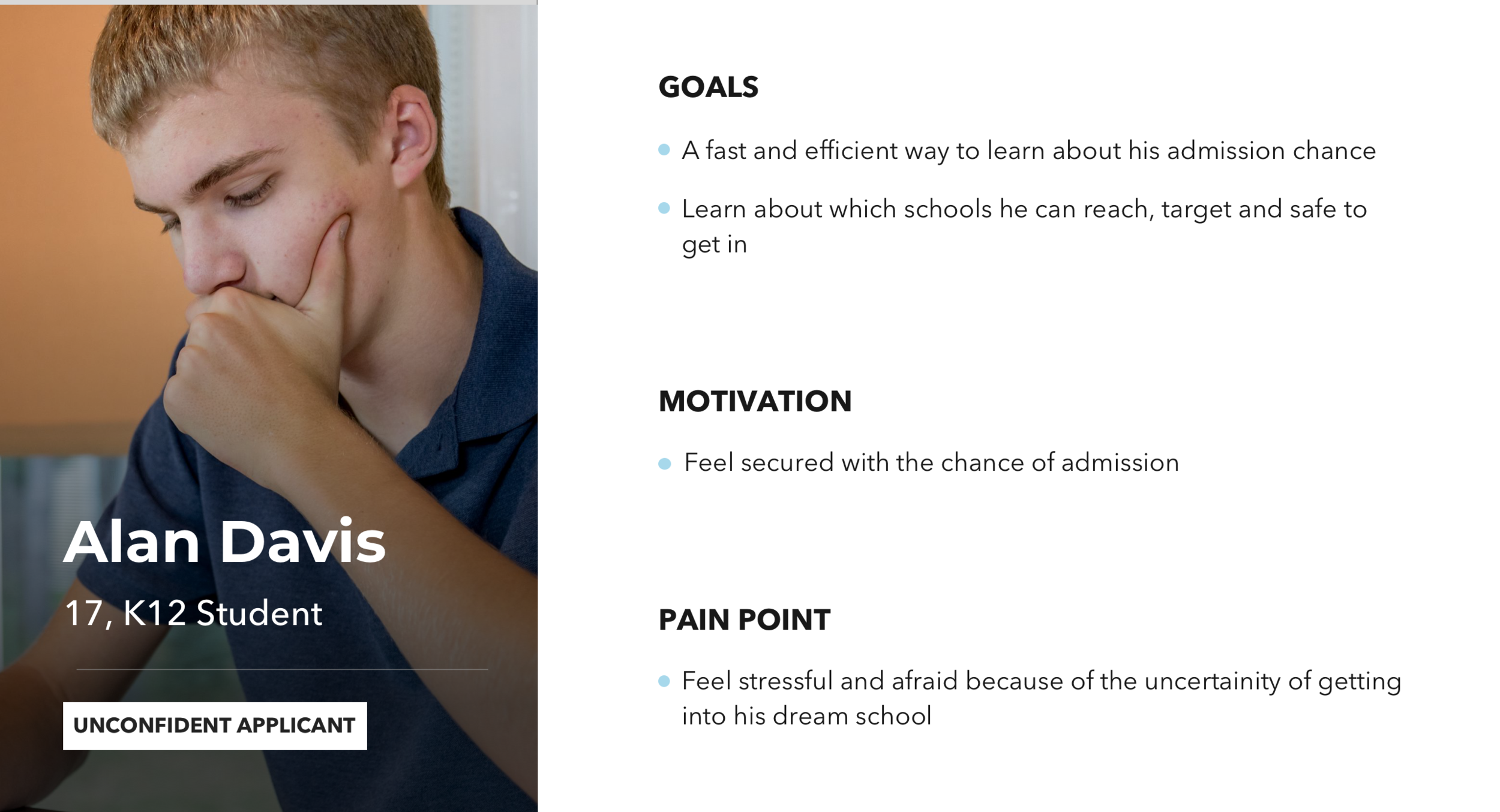
By combing and analyzing all my findings, I developed three personas to define users challenges and motivations which are essential for segmentation of user types, keeping in check of user needs and prioritizing features when making design decision in the later stages.
Feature roadmap
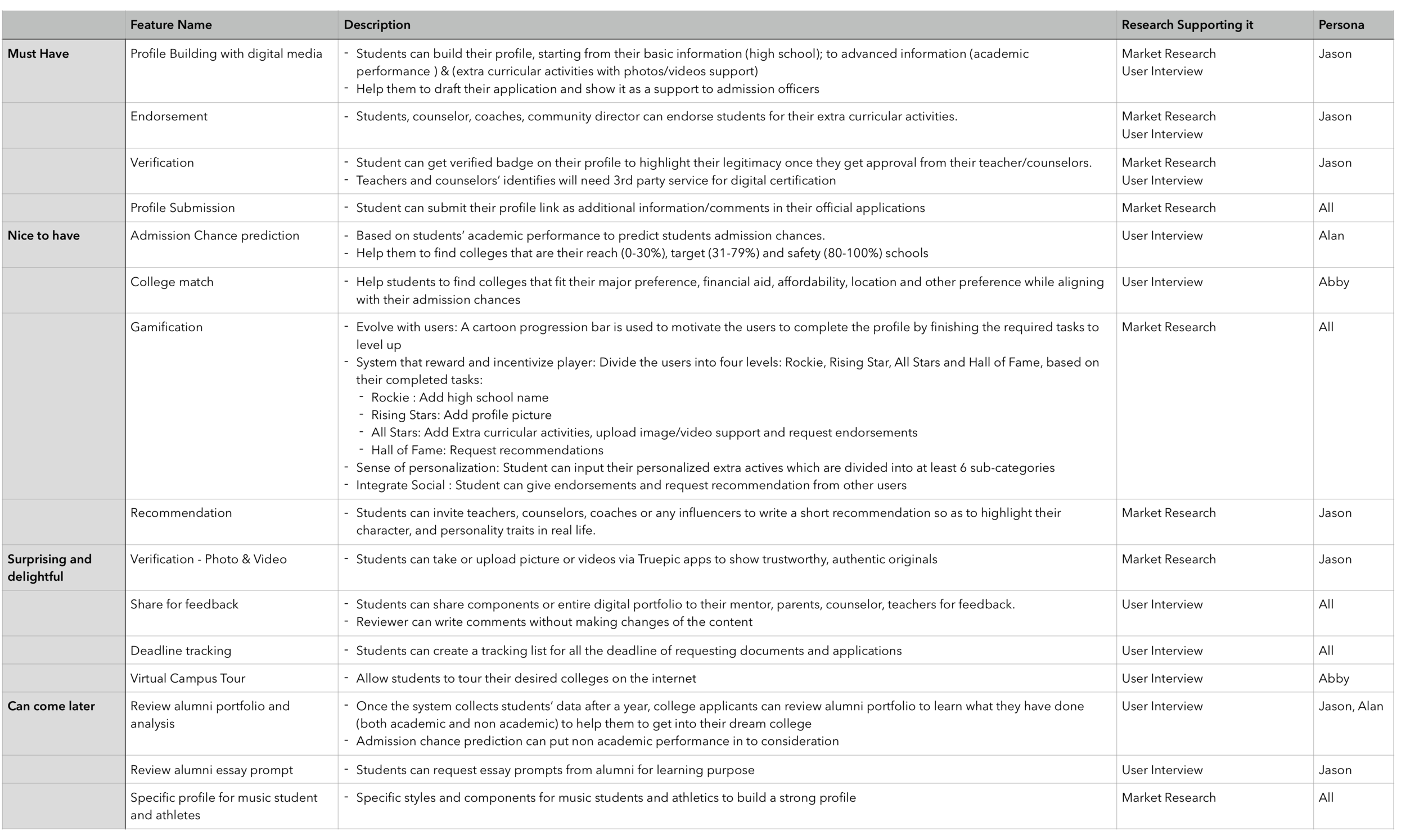
A feature roadmap helps me to prioritize the features and understand the information hierarchy that pave the ways to ideate the user flow and wireframe.
User Flow
I went through three rounds of iterations to examine the user onboarding and profile building experience.
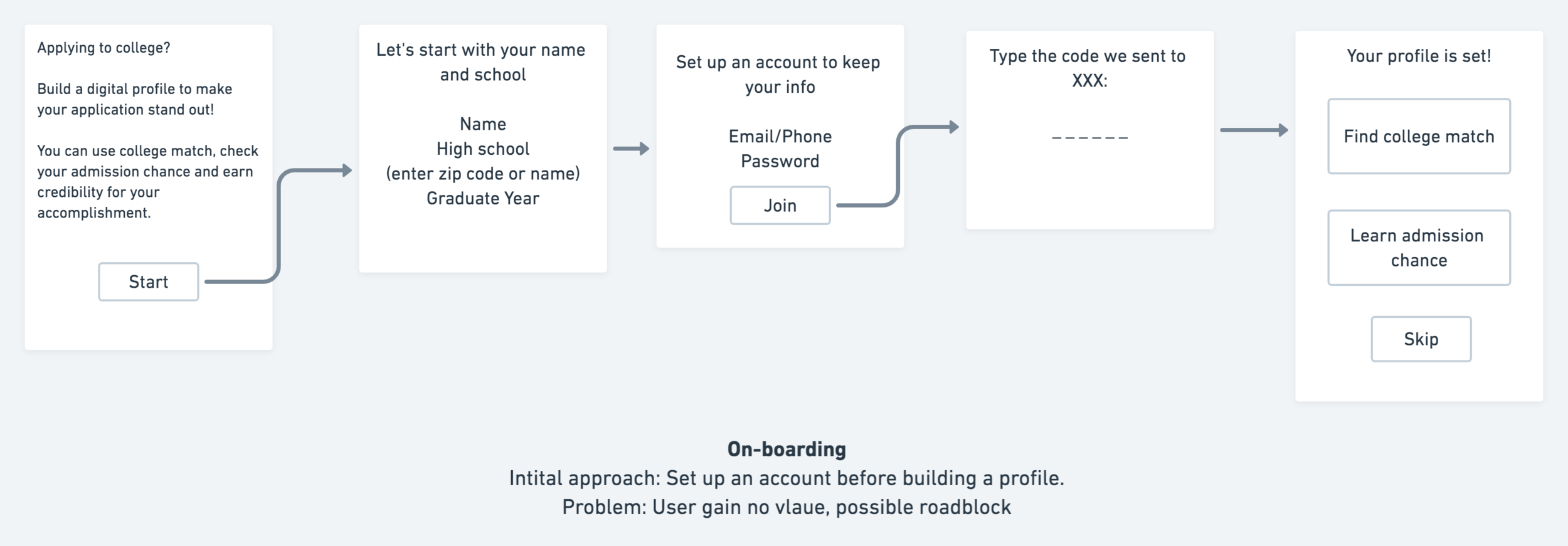
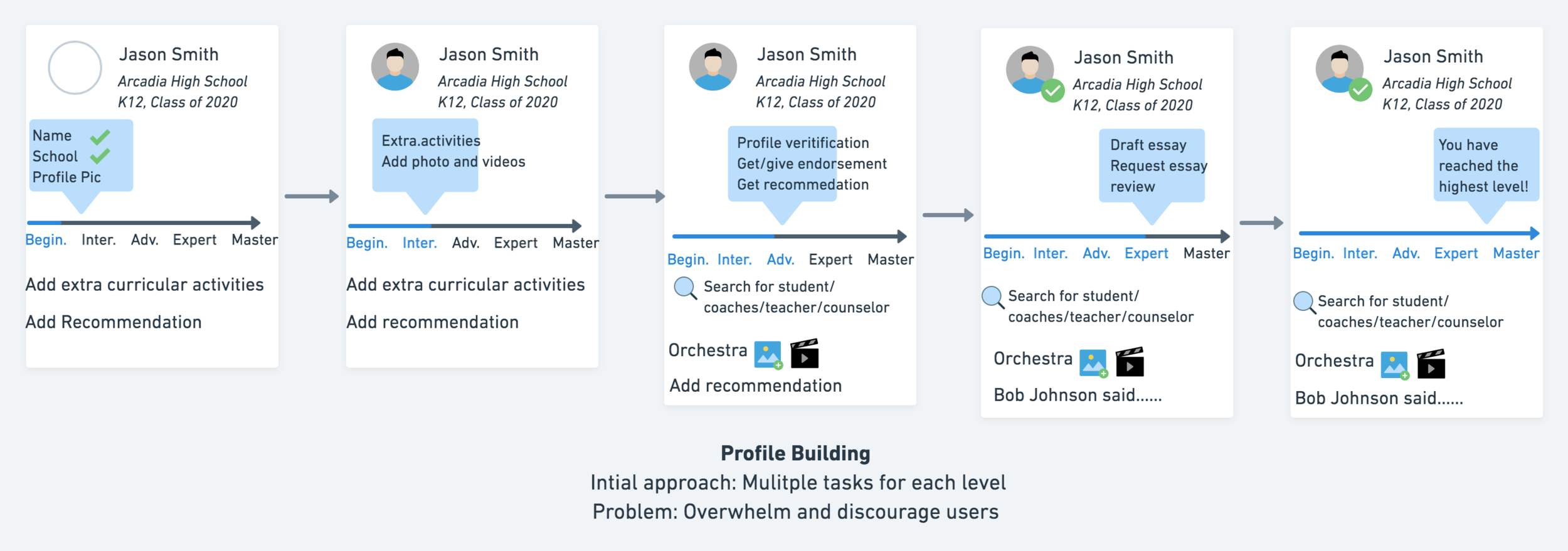
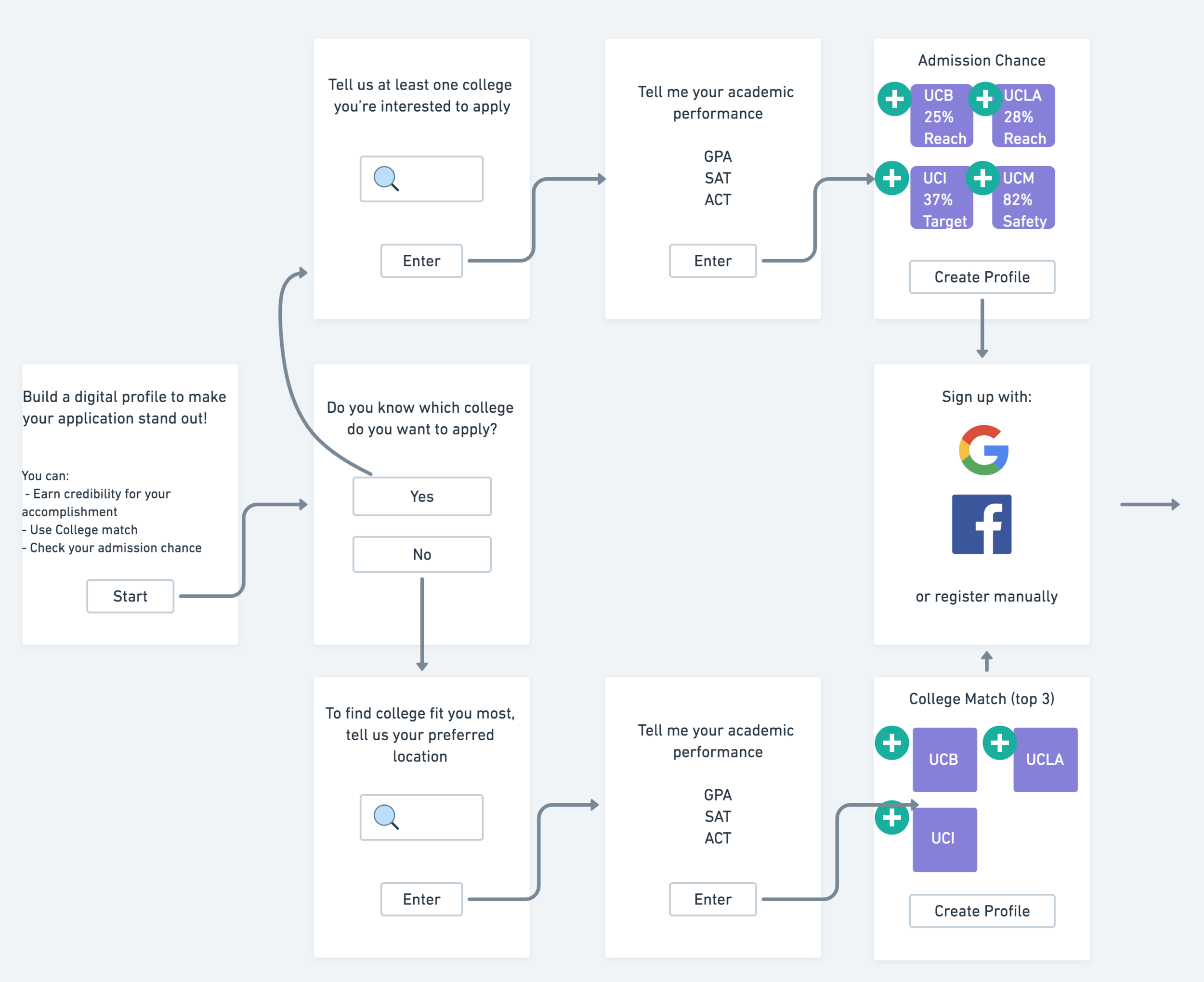
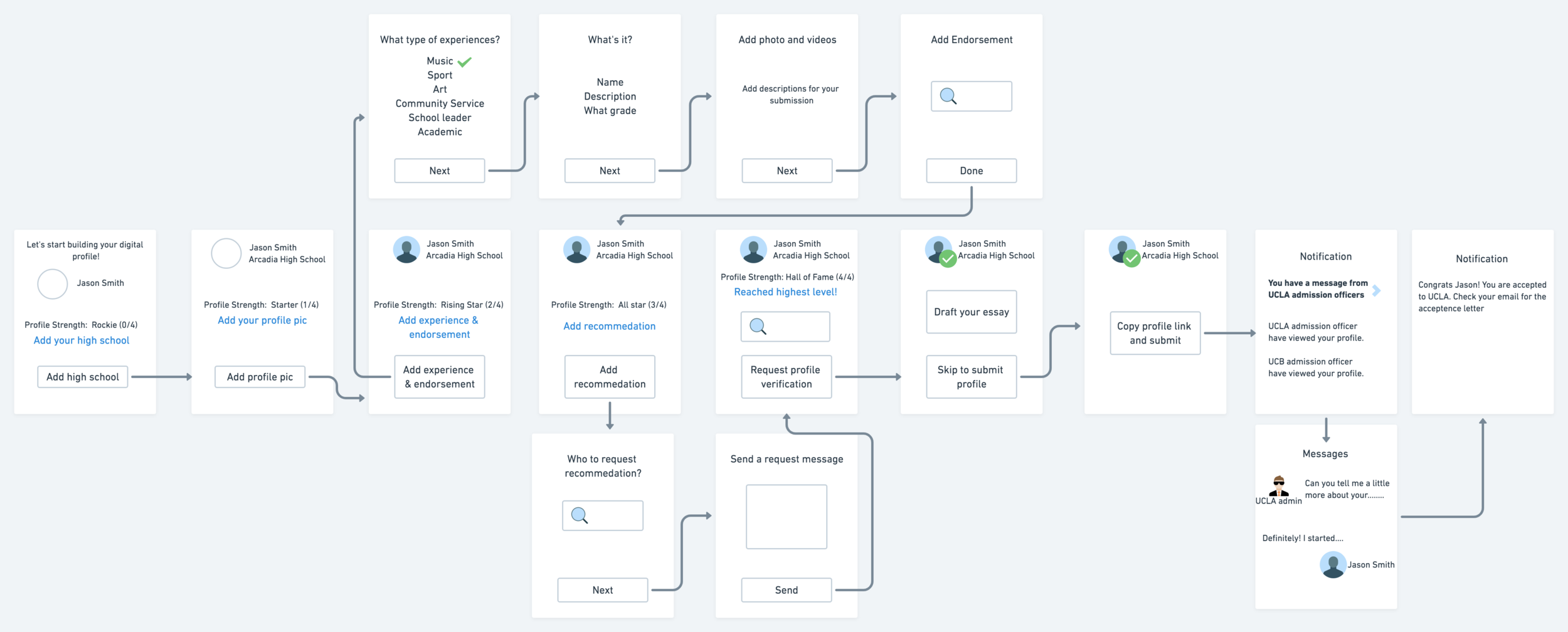
For version 3, I simplified the entire user flow by minimizing the onboarding procedures into three steps and profile building into four tasks to maintain simplicity and efficiency.
To encourage users to set up and complete the profile, I adopted three significant strategies in this final version:
Gradual engagement - allowing user to quickly learn about their college match or admission chance before creating an account.
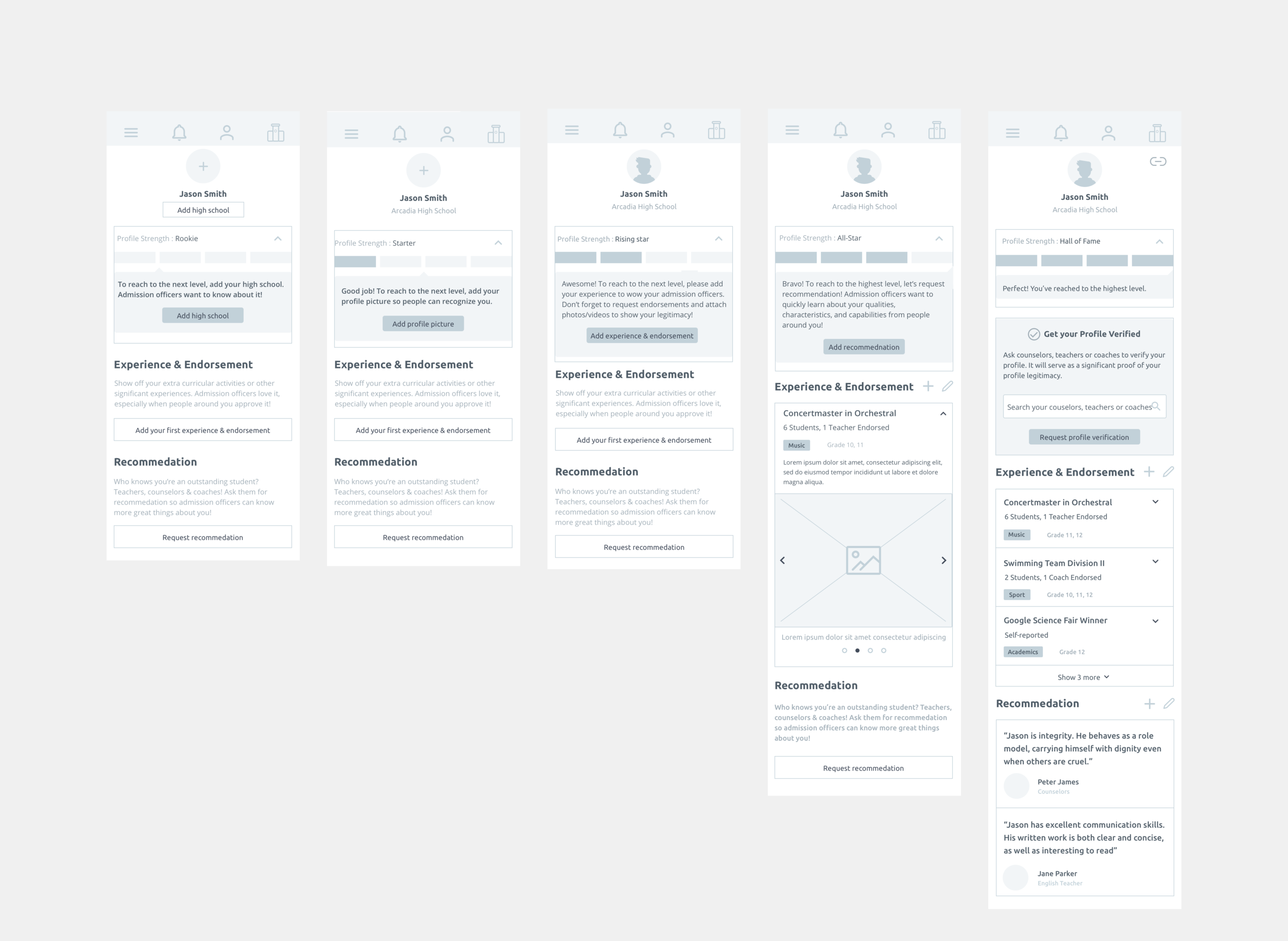
Gamified progress bar - motivating users to complete the profile
Cut out the clutter - creating only one primary action per screen
Design
Mid-Fidelity Wireframe and Prototype
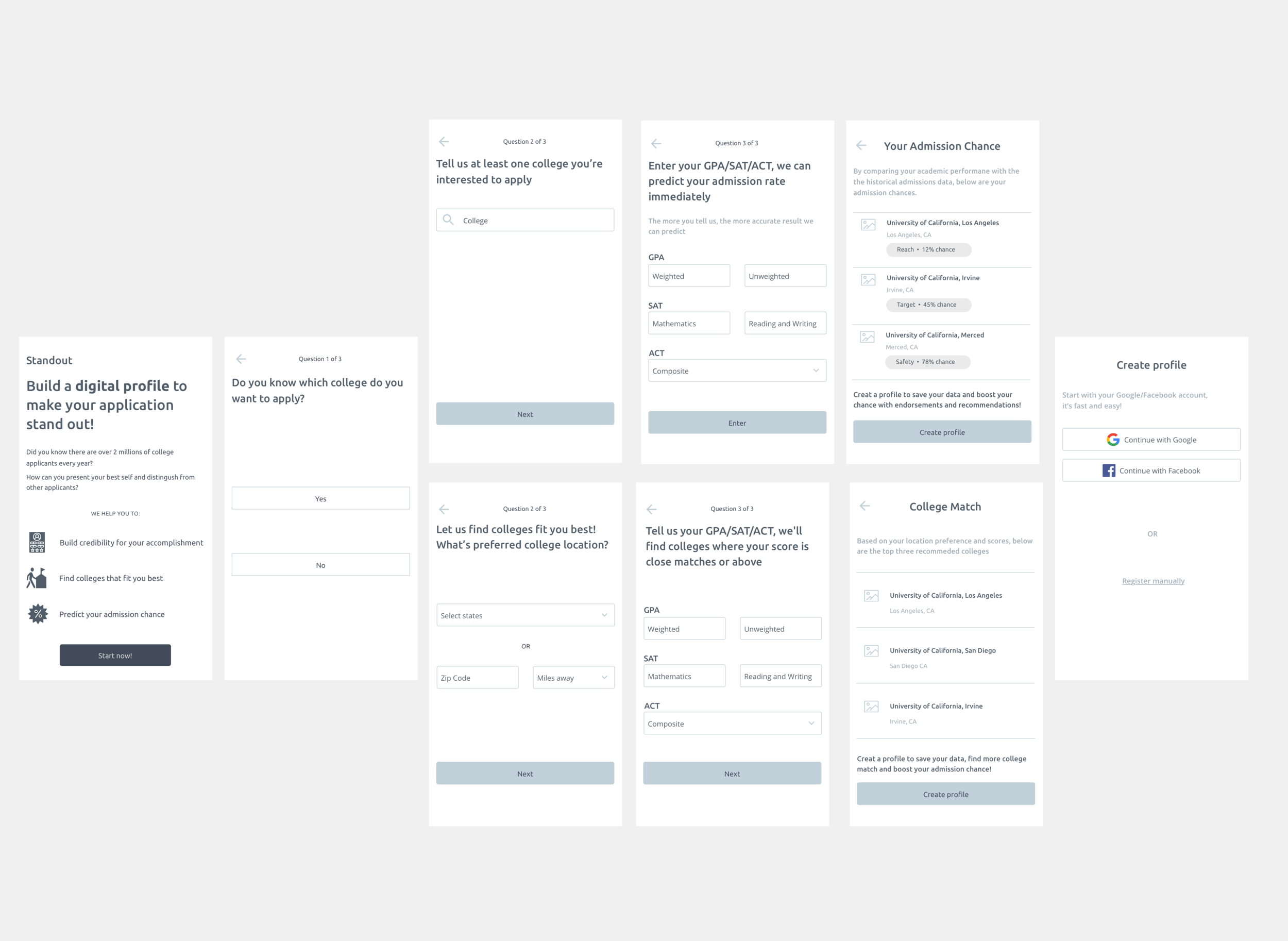
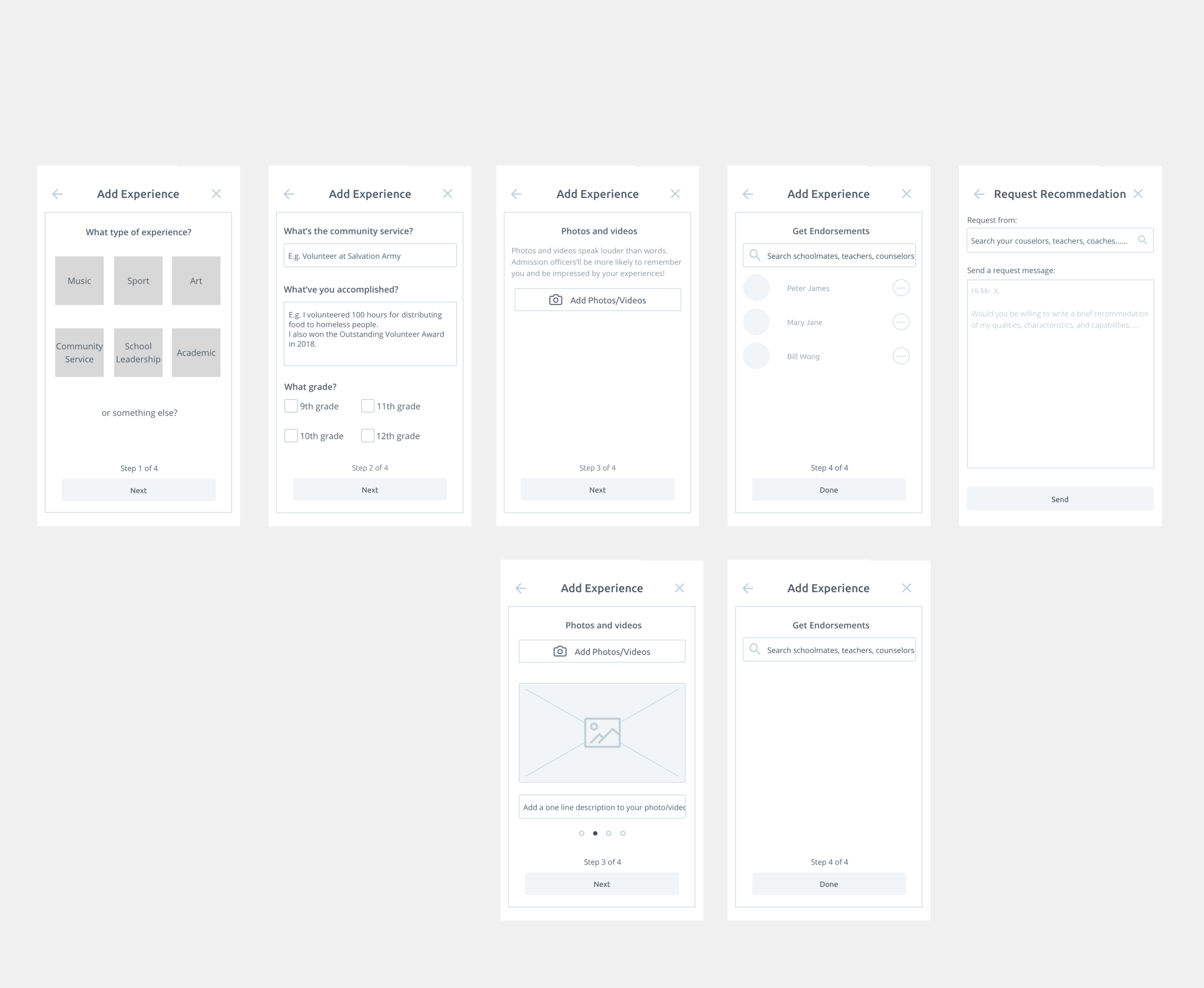
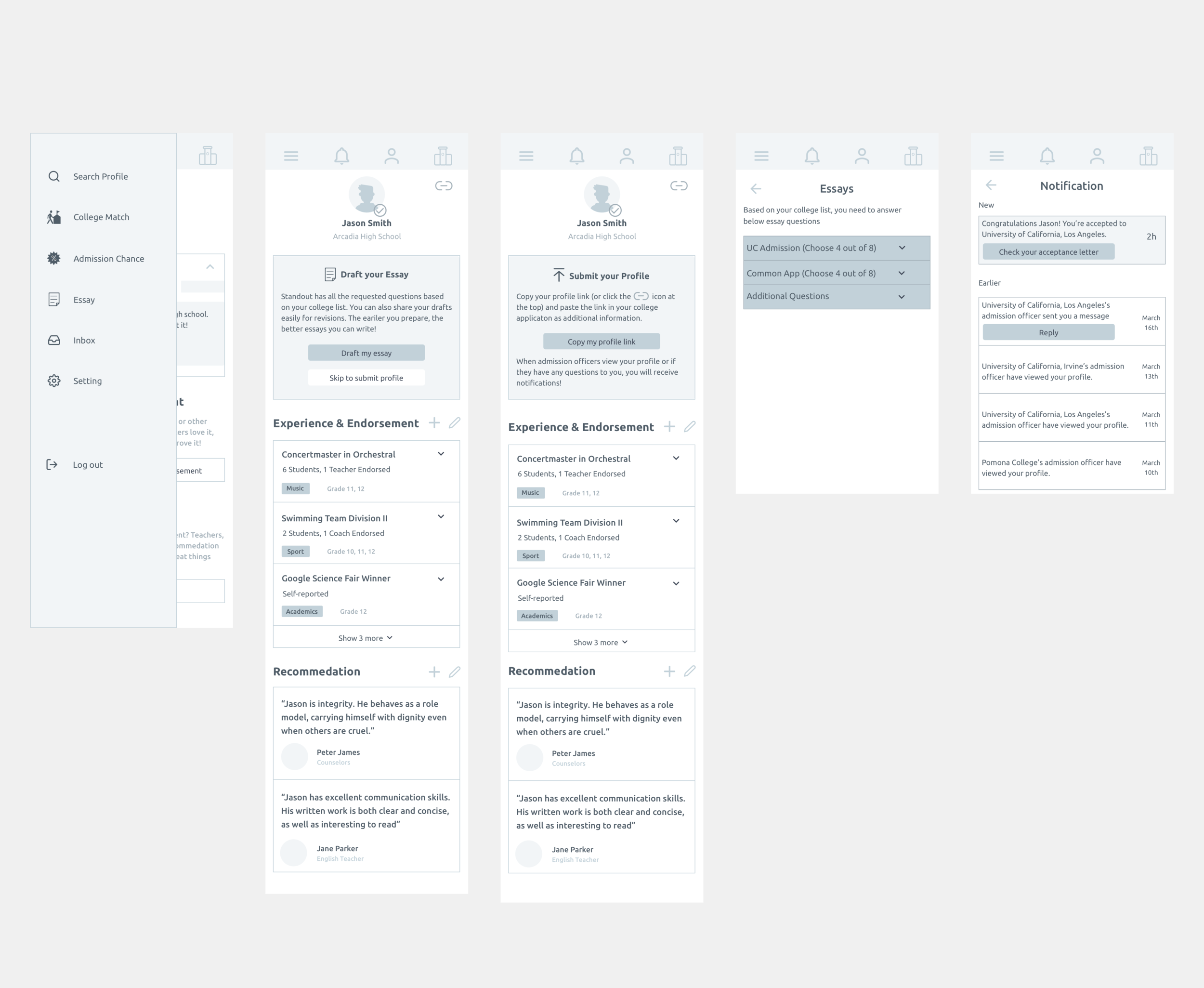
Moving on to wireframe, I created a set of mid-fidelity wireframes and prototype for testing the on-boarding and profile building process.
Testing
User Test
I conducted user testings with five different users who are either K12 or college freshmen. By testing my mid-fidelity prototype on a mobile phone, I learned how they would complete on-boarding and profile building once they were given some context.
In terms of usability, the prototype achieved 100% tasks completion rate. And being a moderator of the test, I earned valuable users feedbacks. All of the participants think Standout helped them to prepare their college application strategically and the entire process was engaging and seamless.
“I wish I could use Standout when I apply for college! It would make my application stand out with the endorsements and recommendations”
“I really like the college match feature, it’s fast and easy for me to learn about my options”
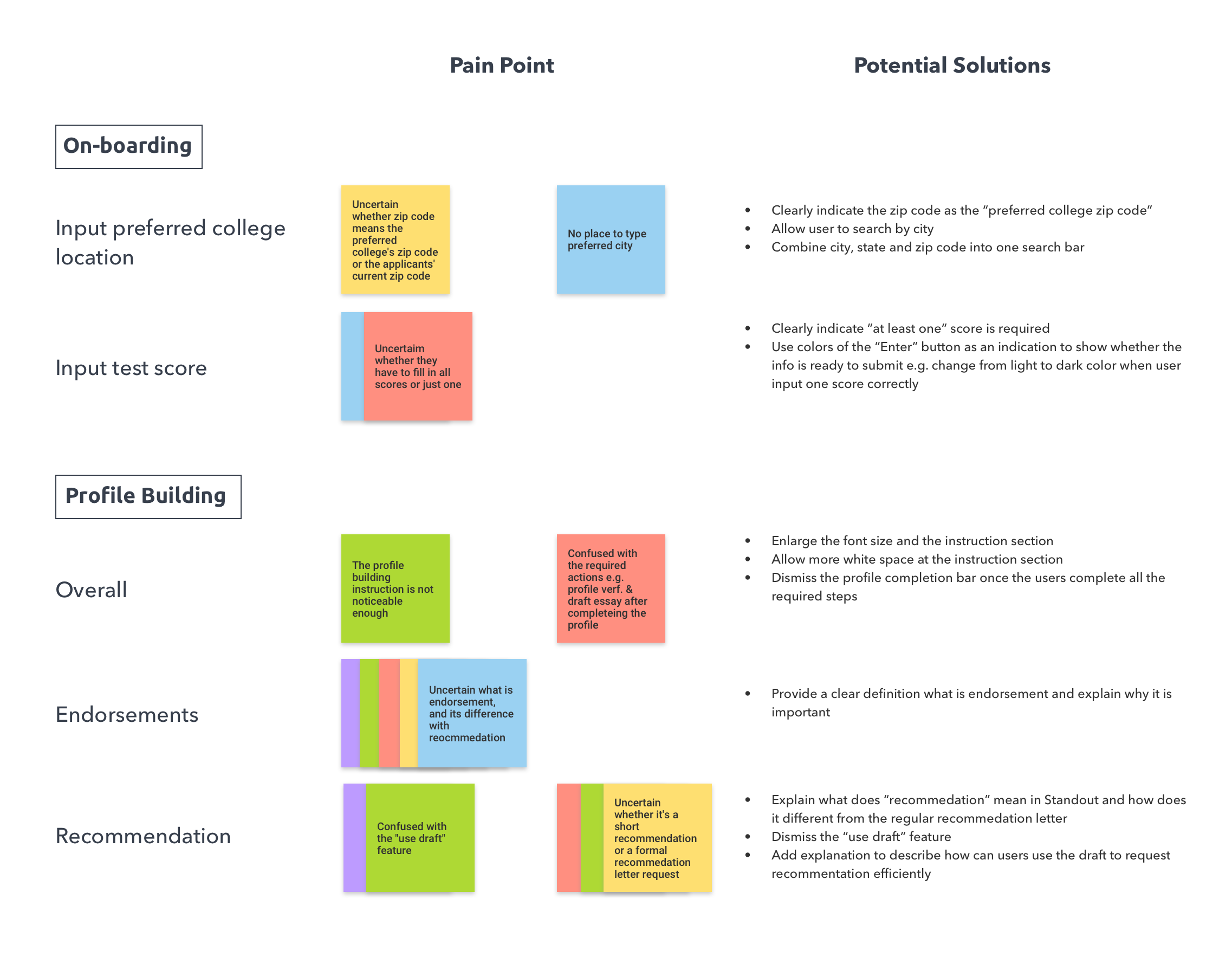
Affinity Map
They also helped me to identify pain points that could be improved in future iterations.
I was surprised to find out:
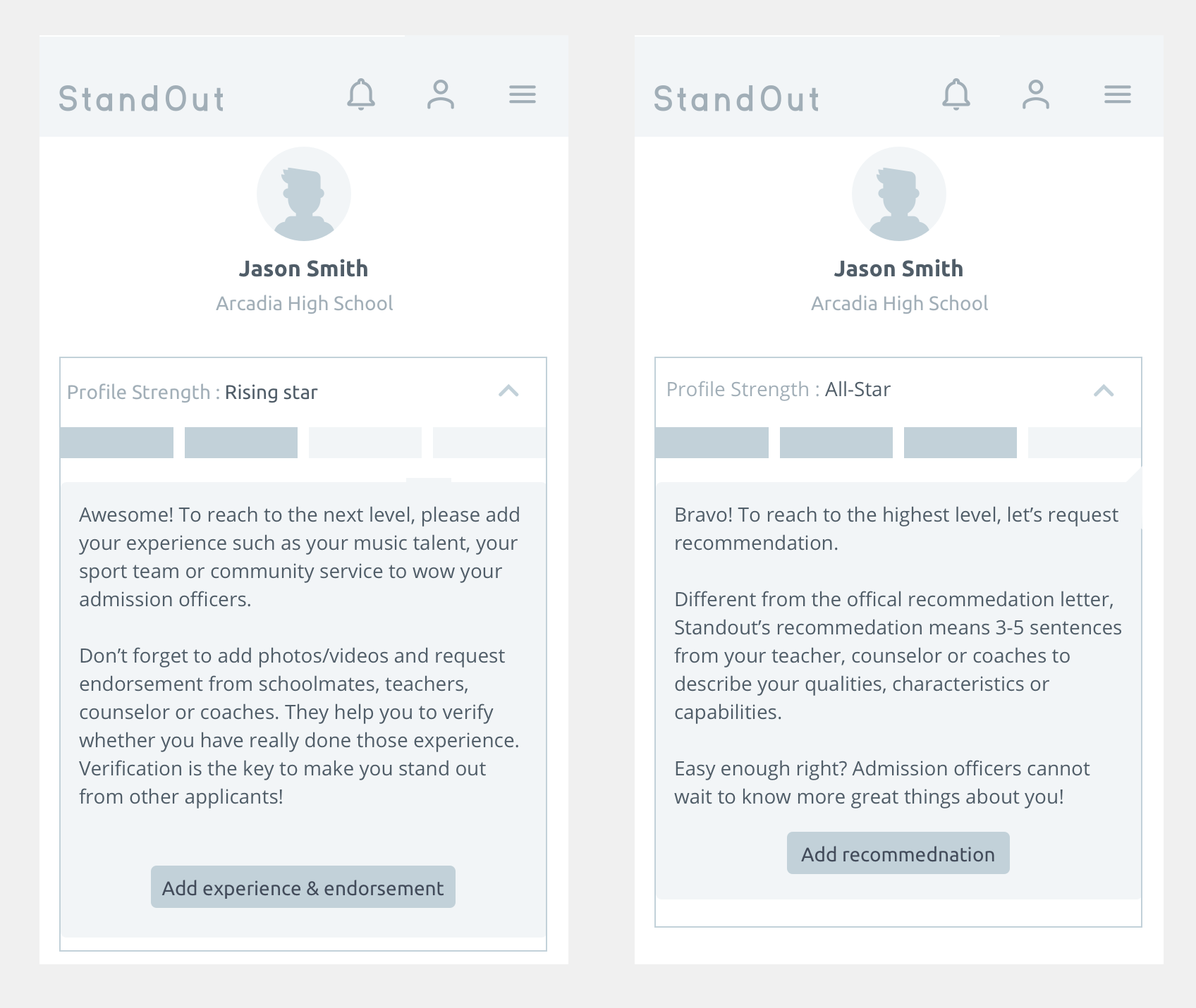
100% participants were confused with the term “endorsement”
60% participants thought recommendations in Standout means the same as the letter of recommendation in their official applications.
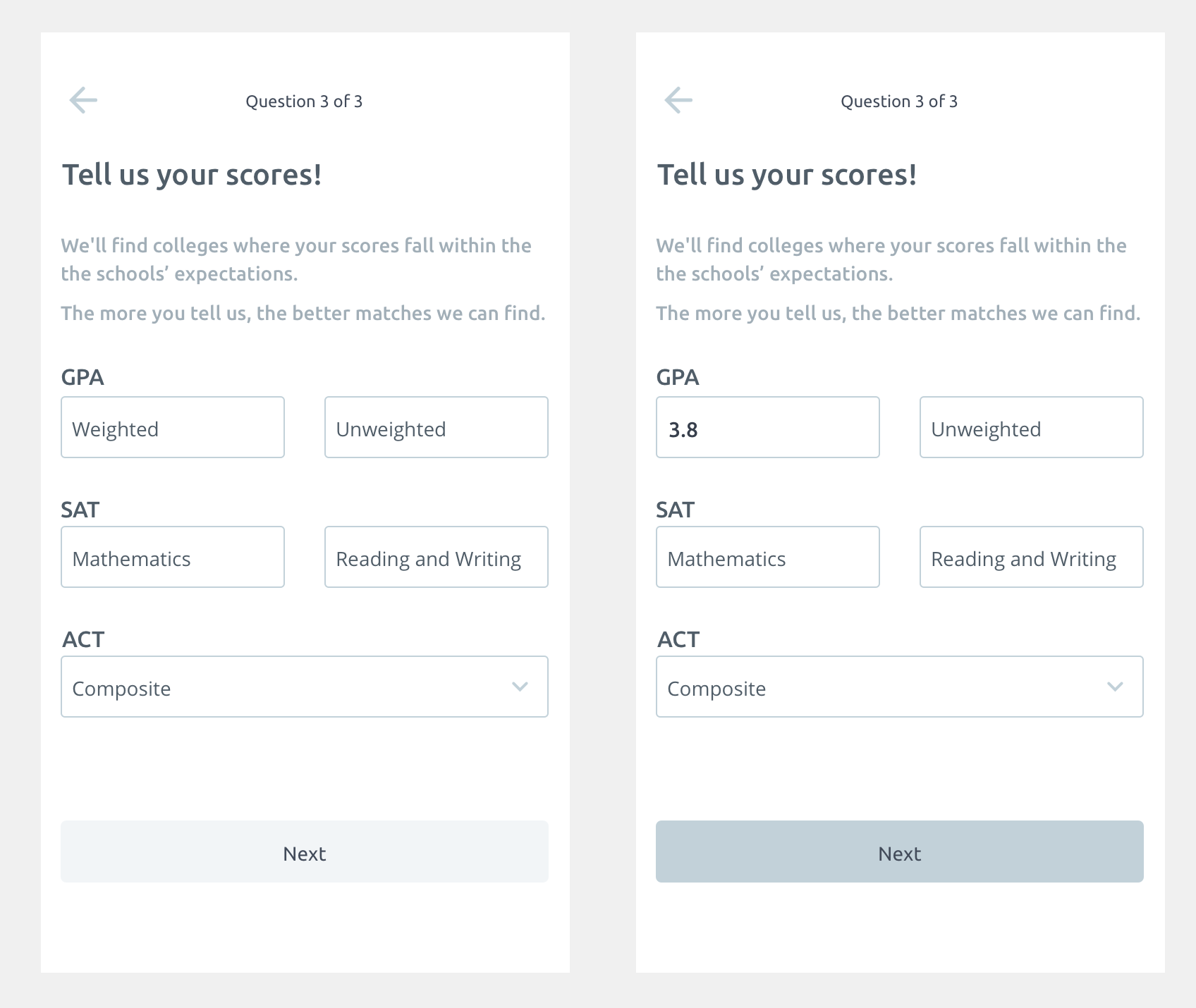
40% participants were uncertain whether they have to input all of their test scores to learn about their admission chance
Iterations
After ideating the possible solutions, I decided to make below iterations:
Explaining “endorsements” and “recommendations” in details in the profile building process
Create enabled and disabled buttons to indicate whether the filled information is sufficient enough to move to the next step
Final Prototype
User Interface
With the priority iterations finished, I designed the interface to feel encouraging, safe and fun.
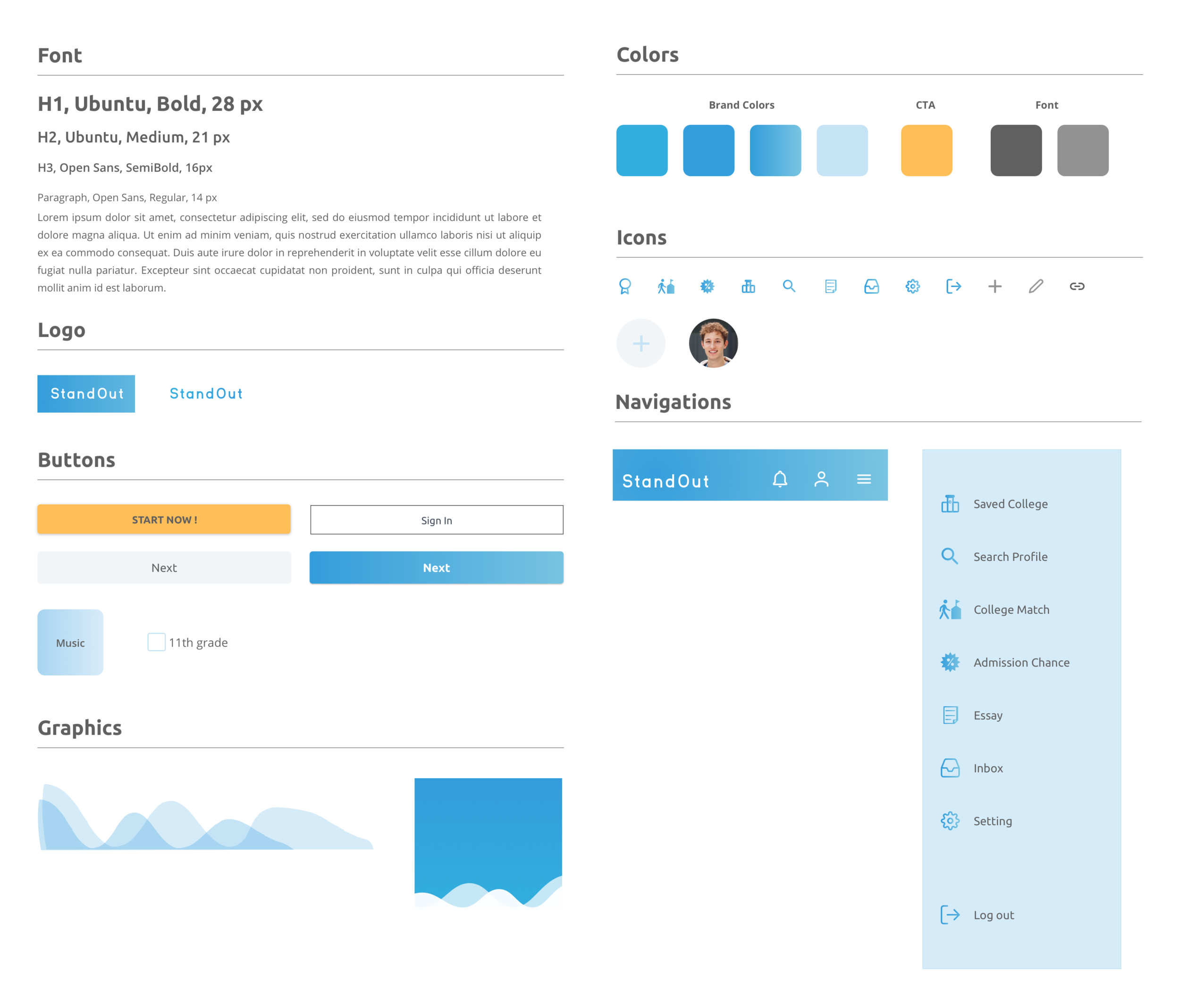
High Fidelity Mockups
Lessons Learned
Building Standout from end-to-end was a fun yet challenging process. No products in the market serves the purpose of validating students’ legitimacy in their college admission. In other words, all the business concepts and design ideas have to be started from scratch.
I learned to:
Think outside the box and to discover the market gap by understanding the greatest users needs
Simplify the user flow and wireframe by prioritizing the features and focusing on one primary action per screen.
Examine every single detail of the product from a human-centered perspective to avoid confusion.
More Case Studies
Smart Spend
Shop the Look